There isn’t one right way to do this work. There are, however, some minimum standards worth holding any retreat to, if you are feeling the call to work with Ayahuasca plant medicine. These are the questions we’ve actively pursued answering well in our approach at Soltara, and we think they hold up anywhere you look.
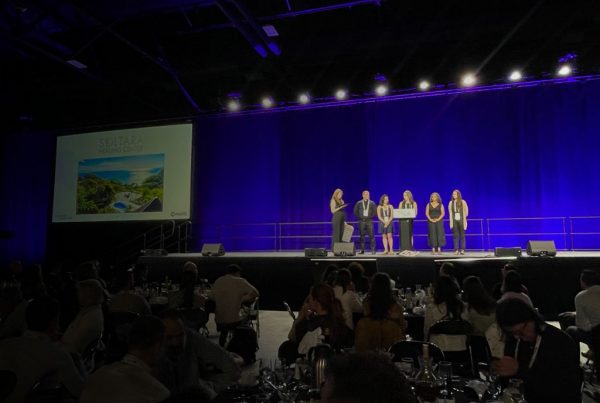
This guide grew out of a talk our co-founder gave to a room of people asking the same question from different angles: participants choosing a center, facilitators learning to hold space, and organizers building retreats with integrity. It’s not exhaustive, and it isn’t medical or legal advice. Think of it as a decade of field notes, organized around the questions that matter most. Alongside our team and advisory board, we’ll share where we’ve landed on each one and why. They’re not the only right answers, so use them as a starting point rather than a verdict: what matters most is what feels resonant and safe for you.
In short, look for:
- Which medicine(s) and why – sourced transparently, with no unexplained additions
- Healers trained for years within a tradition and clear lineage
- A thorough intake process, run by someone qualified to conduct it
- A program with real rest built in, not packed wall to wall
- Clear medical and safety protocols, including a doctor on call
- Genuine collaboration with, and reciprocity toward, the Indigenous tradition the medicine comes from
- Real support after you go home, not just a goodbye email
The medicine itself
Which medicine, and why? Any psychedelic or plant medicine can be disorienting: mentally, emotionally, physically. Done well, that disorientation is the catalyst that reorganizes into healing. Taken on too fast or without the right support, an altered state can overwhelm instead.
Some retreats combine several medicines and traditions in one week, or multiple plant medicines back to back. We’ve seen this work well with the right container and an experienced team, and we’ve also seen it go poorly. The difference usually comes down to planning; support before, during, and after; and the medicine team’s experience.
At Soltara, we work with one medicine, Ayahuasca, on its own, for three main reasons:
- The nervous system. Each guest’s body needs space to metabolize what it’s given, without added complexity.
- A trauma-informed approach. Ayahuasca as a medicine isn’t trauma-informed — master plant teachers are forces of nature, and not always gentle by design. It’s on us to build a container strong enough that a guest can fully surrender to the process, trusting they’ll be held.
- Respect for the Shipibo tradition, where cannabis and other substances are understood to interfere with a person’s connection to Ayahuasca.
This is also why we ask guests to avoid other psychoactive substances for thirty days before and after a retreat. Combining medicines can work well in the right hands. That said, it’s worth asking whether the container around it is strong enough to hold that combination, and whether it respects the tradition(s) it’s working within.
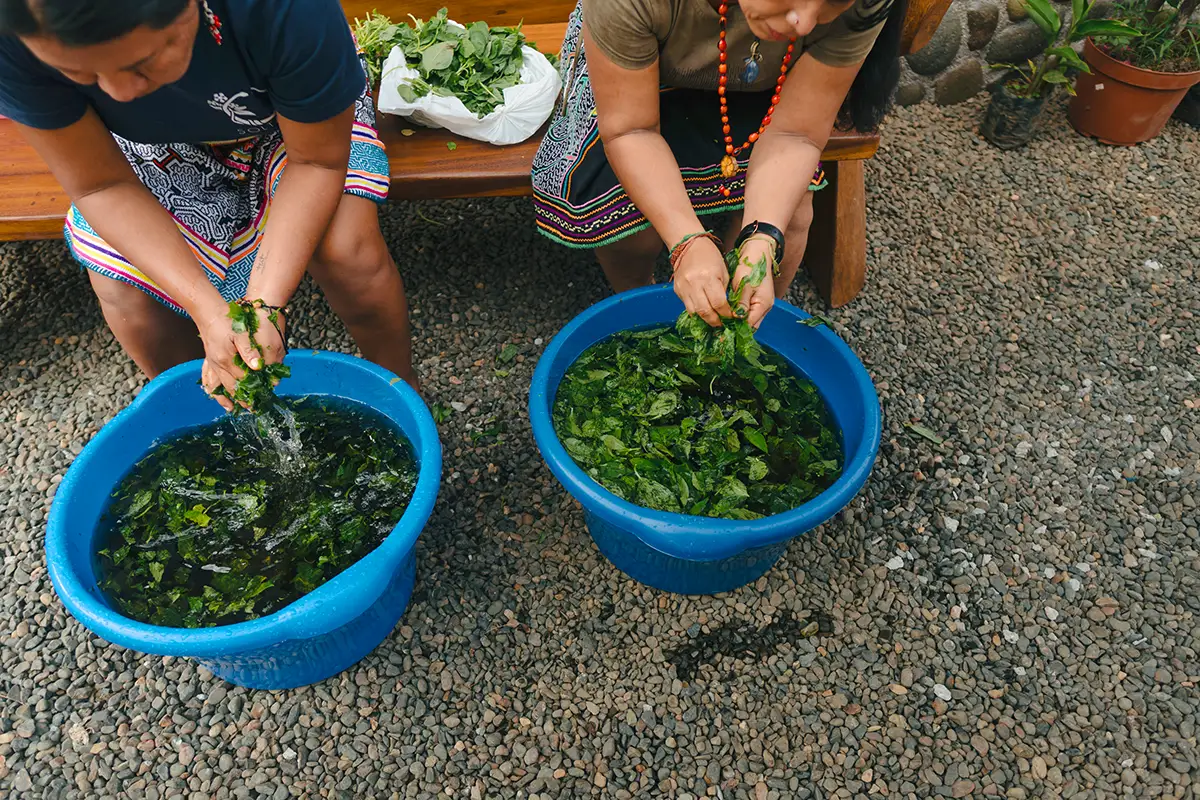
Where does it come from, and what’s in it? A center operating in integrity will answer this with transparency. Within the Shipibo tradition, the brew typically combines Ayahuasca vine (Banisteriopsis caapi) with Chacruna leaf (Psychotria viridis). Some lineages add other plants, and most require careful dieting to use safely. Sustainability matters too: Peyote, Kambo, and Bufo alvarius are all under real pressure from overharvesting, so Chacruna.net and the Indigenous Peyote Conservation Initiative are good places to start if you’re researching those specifically.
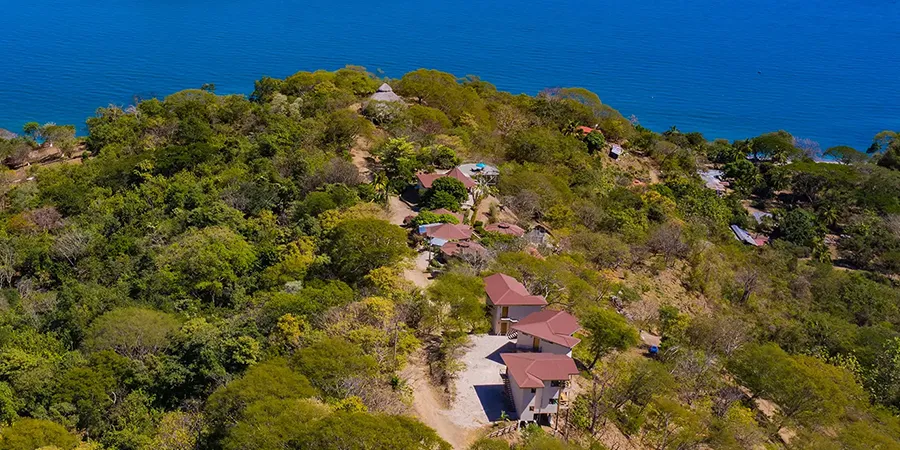
At Soltara, our Ayahuasca is sustainably sourced from Costa Rica and made from Ayahuasca vine and Chacruna leaf alone.
Who’s holding the ceremony?
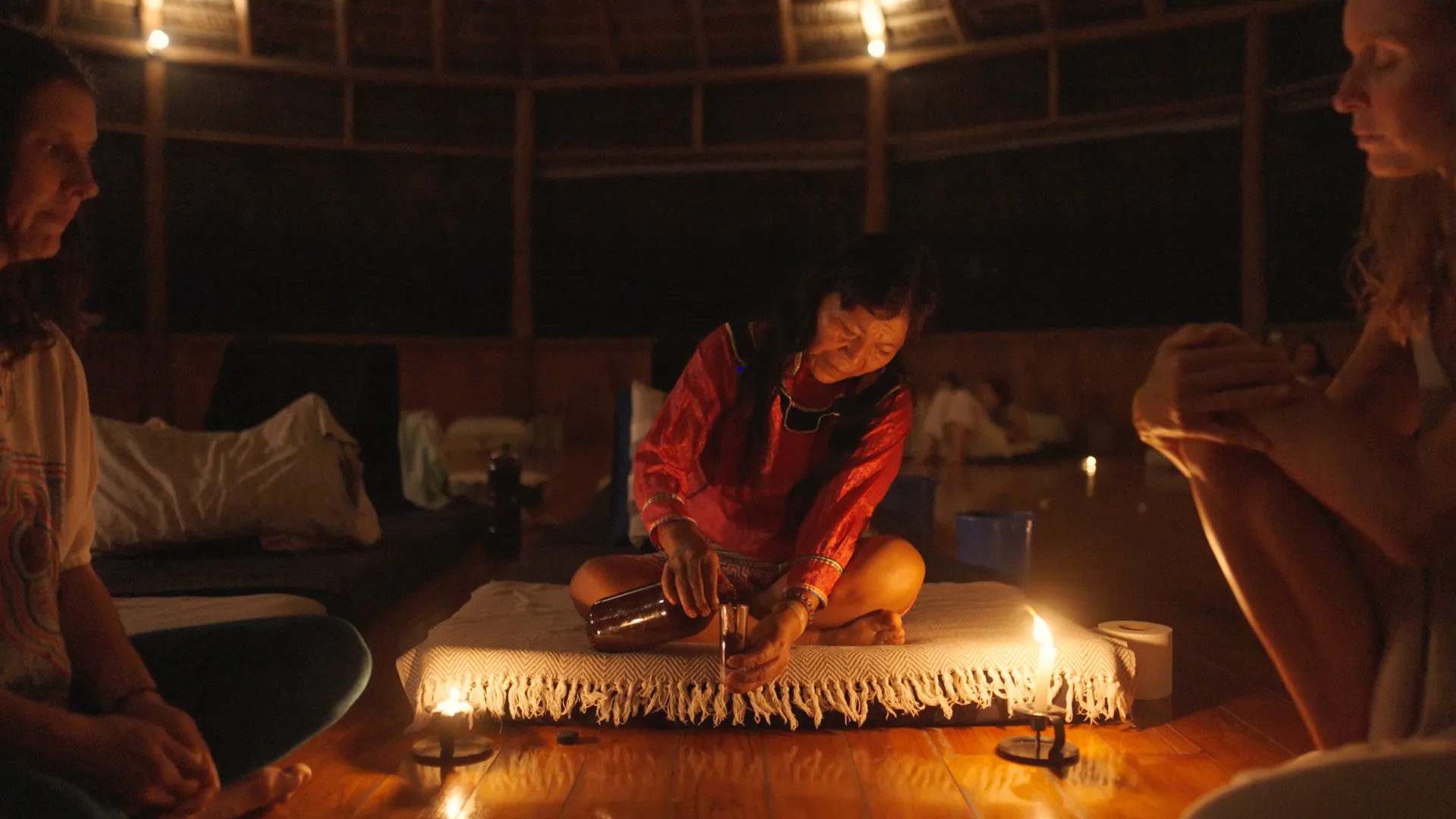
The healers. Becoming a curandero within the Shipibo tradition is a years- or decades-long apprenticeship, closer to surgical training than a course. Apprentices work under a Maestra or Maestro, often for years, building their skill through plant dietas: drinking a tea from a specific master plant, connecting with it through Ayahuasca ceremony, and following a strict diet, sometimes in isolation, for anywhere from ten days to a year or more. That connection is understood to surface as an icaro, a healing song, and is the primary way healing moves in the Shipibo cosmovision.
More questions worth asking:
- Who trained this healer, and in what lineage?
- How long were they an apprentice, and how long have they held ceremony alone?
- How many plant dietas have they completed?
Every Maestra and Maestro who holds ceremony at Soltara has worked with Ayahuasca and other master plants for at least a decade, some for more than three.
The facilitators. Many centers doing cross-cultural work separate the healer holding ceremony from the facilitators supporting guests through emotional processing. There’s a real difference between being trauma-aware (a general sense that trauma matters), trauma-informed (actively structuring the space to avoid re-traumatization), and trauma-centered (clinically trained to work on trauma directly). Trauma-informed is the baseline worth expecting.
Worth asking: how many ceremonies have they sat in themselves, how many have they held for others, and who trained them? A higher number isn’t a perfect measure, but it often reflects someone who’s faced enough of their own material to hold space for yours without projecting onto it.
At Soltara, every facilitator is trauma-informed and has sat in at least fifty ceremonies before joining, most within the Shipibo tradition.
The ratio. An experienced healer can generally hold space for ten to twelve people alone; beyond that, most centers work with more than one. Soltara holds ceremony with two Shipibo healers, a team of facilitators, and operational and medical staff, for a maximum of 18 – 22 guests.
Before you drink
 Intake. This medicine isn’t for everyone. A good screening process should cover medical and psychological history, current medications, past experience with psychedelics, and your intentions for the retreat. Whoever runs it should be medically or clinically qualified, or have direct access to people who are – as even the most experienced healers aren’t trained to evaluate every medical contraindication. Certain medications, SSRIs among them, don’t mix safely with Ayahuasca, so it’s worth talking to your own doctor about timing if you’re on one.
Preparation. Good preparation includes dietary guidance and support across the physical, mental, emotional, and spiritual dimensions of healing and growth. Dedicated, personalized support as well as community spaces for connection are equally important. At Soltara, we also share resources for loved ones and communication tools to empower families and communities in the long term, because healing (and life) happen in relationship.
What the retreat itself should hold?
Pacing. While a packed schedule may seem like the best investment initially, it may leave participants depleted rather than resourced. Ask whether optional activities are clearly marked as optional, and whether there’s real rest – at least a half day – after each ceremony. The twelve to twenty-four hours after a ceremony are when the nervous system settles, and insight takes root; that time often does as much work as the ceremony itself. A trauma-informed and safe center also builds in a full day of grounding after the last ceremony, and recommends staying at least one night in-country before an international flight.
Safety. Is there a doctor on site or on call? Safety protocols in place? A clear waiver outlining real risk? And, plainly: is there an explicit rule against romantic involvement between healers or facilitators and guests? This should never be ambiguous.
Soltara is medically permitted by the Costa Rican Ministry of Health as an alternative health clinic, with an on-site clinic, a doctor and therapist on call, and safety protocols built over years of working in a remote setting.
Working alongside the tradition
With the increasing globalization of Ayahuasca and psychedelic plant medicines, grounding this work in real relationships and cross-cultural collaboration is the heart of this work. Everything about the retreat experience follows from this.
Many of these medicines come from Indigenous traditions that have been colonized and extracted from for generations. Working alongside that history ethically isn’t a single decision made once. It’s an ethos held in every choice a center makes.
At Soltara, the Shipibo healers we work with lead the ceremonial work and energetic healing, full stop. The role of the rest of the team is to build everything around that: permits, logistics, medical infrastructure, travel, supportive programming, experienced facilitators, and more. Every piece of added programming gets checked with the healing team first: does this support the ceremony, or interfere with it?
We’re guided by the Shipibo tradition, and we work alongside therapists and trauma-informed facilitation, built through years of co-creation with the healers we partner with. How a center talks about the tradition it works within is often the clearest signal of the relationship behind it.
Reciprocity. Ask whether a center gives back to the specific communities and lands it operates from, and whether the work is accessible to people who couldn’t otherwise afford it. At Soltara, this has looked like support for Shipibo-led initiatives, fundraising for Shipibo families after flooding along the Ucayali River, scholarship programs, and rainforest conservation partnerships. About half our staff, including management and facilitation team members, are Costa Rican.
After you leave
Integration is the work of carrying what surfaced in ceremony into your actual life. We share with guests that the retreat is the catalyst, not the destination; what you do with it afterward is where the healing takes root.
Worth asking: is there structured support once you’re home? Access to practitioners with real experience in this specific medicine? A community of others on a similar path?
At Soltara, every guest receives a full year of holistic support: one-on-one sessions before and after the retreat, a guidebook, a community platform, and group circles. We also built a program for guests’ partners, loved ones, and families to move from individual to collective healing and integration.
A closing thought
Many people do this work with real integrity, across many traditions and approaches. No single list captures everything, but a retreat that can answer these questions well is worth considering.
If it would help to talk through any of this, your history, your questions, or whether now is the right time, we are here to support you. A discovery call with our team is free, and a chance to speak to someone experienced as you decide what’s right for you.